The First Global Satellite Constellations - How Iridium & Globalstar Changed The World
YouTube is a globally recognized digital video-sharing and social media platform, owned by Google. It serves as a comprehensive ecosystem where users can upload, view, rate, share, comment on videos, and subscribe to other users' content. Beyond user-generated content, YouTube hosts a vast library of professional and corporate media, ranging from entertainment to educational and technical broadcasts. The platform supports a wide array of video formats and resolutions, including standard definition (SD), high definition (HD), 4K, and 8K, along with robust live streaming capabilities.
Key Features and Capabilities
As a foundational component of the internet's content infrastructure, YouTube offers several critical features:
- Content Hosting and Global Distribution: YouTube provides a scalable solution for hosting video content, leveraging Google's extensive global network infrastructure to ensure efficient delivery to audiences worldwide. This reduces the burden of media storage and bandwidth management for content creators and organizations.
- Advanced Search and Discovery: The platform incorporates a sophisticated search engine and recommendation algorithms that assist users in discovering relevant content. These algorithms analyze user viewing habits, search queries, and engagement metrics to personalize content feeds.
- Live Streaming Services: YouTube supports real-time video broadcasting, enabling organizations to host live events, product launches, technical demonstrations, webinars, and press conferences. This feature includes interactive elements such as live chat, facilitating direct engagement with the audience.
- Developer APIs and Embedding: YouTube offers extensive Application Programming Interfaces (APIs), such as the YouTube Data API and the YouTube IFrame Player API. These APIs allow developers to integrate YouTube functionalities into third-party applications, websites, and content management systems. The ability to easily embed videos and playlists into external web pages is also a fundamental capability.
- Analytics and Reporting: Content creators have access to detailed analytics through YouTube Studio, providing insights into audience demographics, watch time, traffic sources, engagement rates, and video performance. This data is invaluable for refining content strategies and understanding audience behavior.
- Content Management and Rights Protection: For professional users, YouTube includes tools for managing large volumes of content, scheduling releases, and applying basic video edits. The Content ID system is a significant feature for copyright holders, automatically identifying and managing copyrighted material across the platform.
- Accessibility Features: The platform supports closed captions, subtitles, and multi-language audio tracks, enhancing accessibility for a diverse global audience and complying with various accessibility standards.
Target Audience and Industry Relevance
Within the satellite and connectivity industry, YouTube serves as a powerful resource for various stakeholders:
- Satellite Operators and Service Providers: Can utilize the platform to showcase satellite launches, demonstrate ground segment operations, explain complex connectivity solutions (e.g., GEO, MEO, LEO constellations), and provide corporate updates. It's an effective channel for technical explainers and service demonstrations to potential clients.
- Connectivity Hardware Manufacturers: Benefit from YouTube by publishing product unveilings, detailed equipment demonstrations (e.g., VSAT terminals, antennas, modems), installation guides, and maintenance tutorials. These visual aids are crucial for customer support and product education.
- Software Developers and Integrators: Can share video tutorials for their APIs and Software Development Kits (SDKs), demonstrate the functionality of network management software, or present innovative applications built for the satellite communication ecosystem.
- Researchers and Academic Institutions: Leverage YouTube to disseminate research findings, present conference papers, host webinars on space technology advancements, and offer educational content on telecommunications principles.
- Marketing and Communications Teams: Use the platform for product promotions, customer success stories, thought leadership content, and live Q&A sessions, reaching a broad professional audience.
- Training and Development Departments: Can create and host internal or external training modules, onboarding videos for new employees, and technical refreshers for partners and clients.
- Industry Associations and Event Organizers: Regularly use YouTube for live streaming industry conferences, panel discussions, and webinars, as well as for archiving event content for on-demand viewing.
Technical Underpinnings and Compatibility
YouTube's robust technical architecture relies on modern video codecs such as VP9, H.264/MPEG-4 AVC, and increasingly AV1, enabling efficient compression and high-quality playback. It employs adaptive bitrate streaming (DASH - Dynamic Adaptive Streaming over HTTP), which automatically adjusts video quality based on the user's internet connection speed and device capabilities, ensuring a smooth viewing experience. The platform's global content delivery network (CDN) infrastructure is critical for low-latency distribution of content worldwide.
Compatibility is broad, with content accessible via web browsers on desktops and mobile devices, dedicated mobile applications, smart TVs, and various internet-connected devices. The extensive API suite facilitates deep integration with other digital platforms and custom applications, enabling automated content publishing, data retrieval, and remote player control.
Related resources
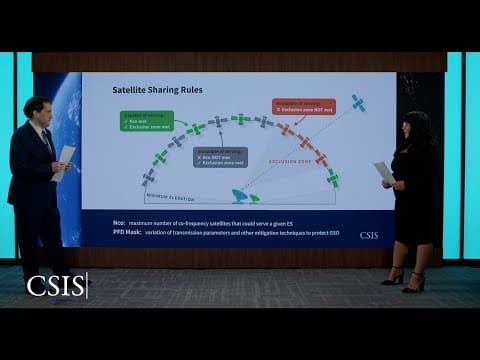
Outdated Rules, New Space Race - Modernizing LEO Spectrum
Policy discussion on need to modernize FCC spectrum allocation rules for LEO satellite constellations, examining how decades-old regulations designed for GEO satellites hamper innovation and U.S. leadership in new space race.

T-Mobile Starlink Direct to Cell Review - Rocky Mountains Test
In-depth review of T-Mobile Starlink Direct to Cell technology tested in remote Colorado mountains, examining automatic satellite handoff, message delivery performance, and current limitations including lack of voice and image support.

SpaceX Reaches 10,000 Starlink Satellites: The Mega Constellation Explained
Explainer video covering SpaceX's achievement of 10,000 deployed Starlink satellites and the scale of the mega-constellation.