Outdated rules, new space race: modernising LEO spectrum policy (CSIS)
An 11-minute CSIS video (August 2025) in which Matt Pearl (CSIS) and Karina Perez (CCIA) argue that decades-old spectrum rules, notably the power limits shared between LEO and GEO systems, slow US LEO innovation, and explain what modernising them would mean for capacity and competition.
In this video
The Center for Strategic and International Studies, a Washington think tank, published this 10 minute 53 second piece on 14 August 2025 (about 2,200 views). Per its description, "LEO satellites are redefining global communications and security, but U.S. innovation is being slowed by decades-old spectrum rules"; Matt Pearl of CSIS and Karina Perez of the Computer & Communications Industry Association explain why updating them "is critical to expanding connectivity and keeping U.S. space leadership on top". It is advocacy from a policy institution, clearly labelled, and the argument is the one SpaceX has made in FCC and ITU proceedings.
Why it matters for a business buyer
The rules in question are the equivalent power flux density (EPFD) limits written into the ITU Radio Regulations in the late 1990s to protect geostationary satellites from interference by non-geostationary systems sharing Ku- and Ka-band. They cap how much power a LEO satellite may put on the ground in certain geometries, which in practice caps the throughput a Starlink or OneWeb beam can deliver in parts of the sky. The 2023 World Radiocommunication Conference agreed to study revising them, with a decision expected at WRC-27; GEO operators and some governments oppose loosening. Why a customer should care:
- Capacity per cell: looser limits mean more usable capacity from the same satellites, which is how sold-out cells and congestion charges get resolved without new launches.
- Competition: the rules apply equally to Amazon Leo and OneWeb; the argument is about LEO versus GEO business models, not one company.
- Timing: nothing changes before 2027 at the earliest, so current SLA figures are the ones to plan on.
For the counter-view, the GEO operators in our directory (54 companies) argue the limits protect services that carry broadcasting and aviation safety traffic. The FCC's own procedures for sharing are explained in the Space Bureau briefing.
Watch this if
You follow the regulatory risk on LEO capacity, you write about the sector, or you want to understand why "EPFD" appears in every Starlink filing. Pair with the FCC commissioner interview for the domestic policy process.
Go further
Definitions: frequency coordination, ITU, EIRP, frequency reuse. Directories: LEO providers, satellite providers in the United States.
Find a provider
The listings this resource is relevant to — every company is profiled with services, coverage and contact details.
Keep reading
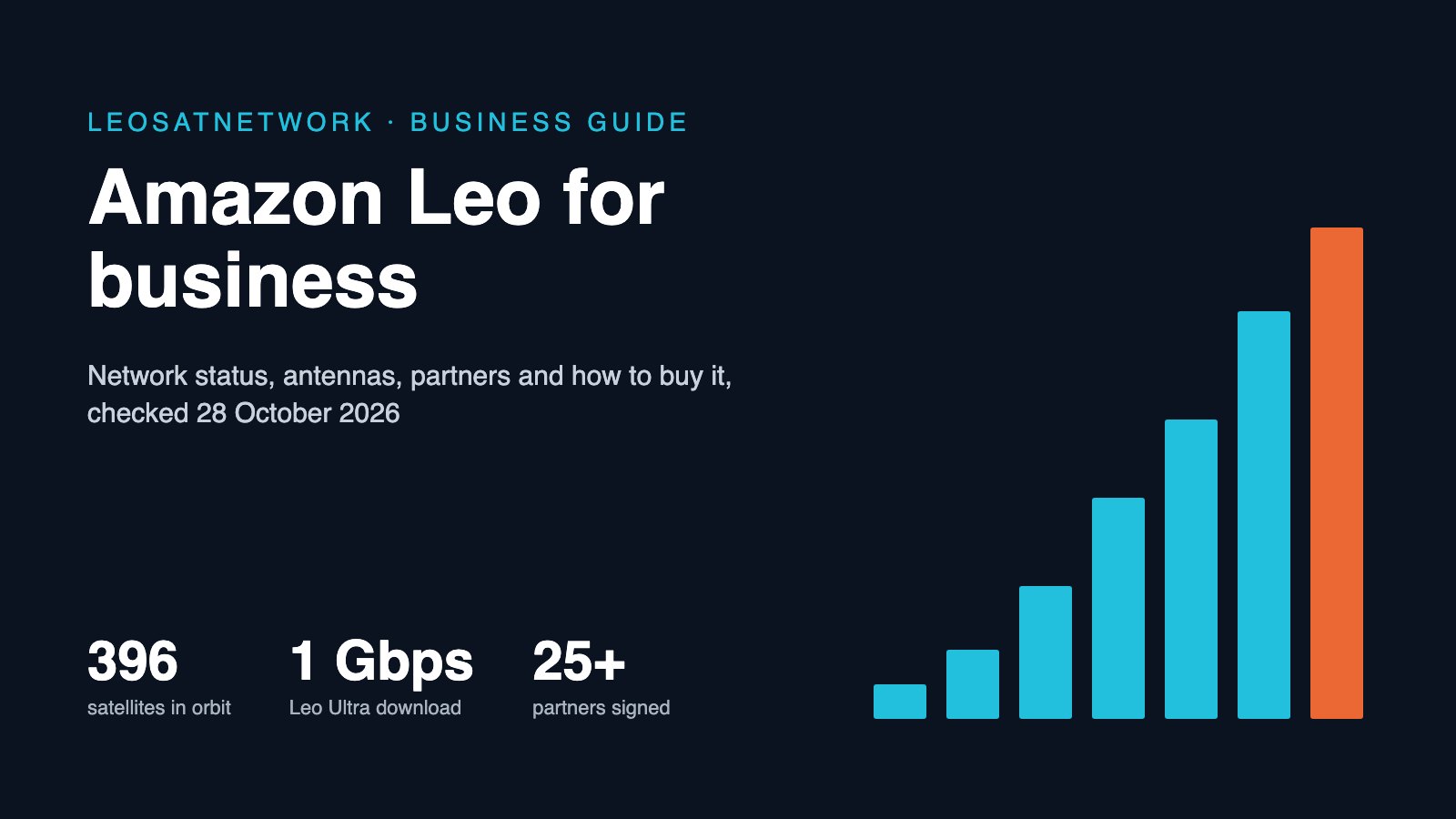
Amazon Leo for business (2026): network status, antennas, partners and how to buy it
Amazon Leo, formerly Project Kuiper, had 396 satellites in orbit on 28 October 2026 and plans initial service in certain latitudes before the end of…

Starlink in the United States: prices, installation cost and installers (2026)
Starlink covers every US state. Residential costs $55, $85 or $130 a month by speed tier, there is no upfront hardware cost in select areas ($349…
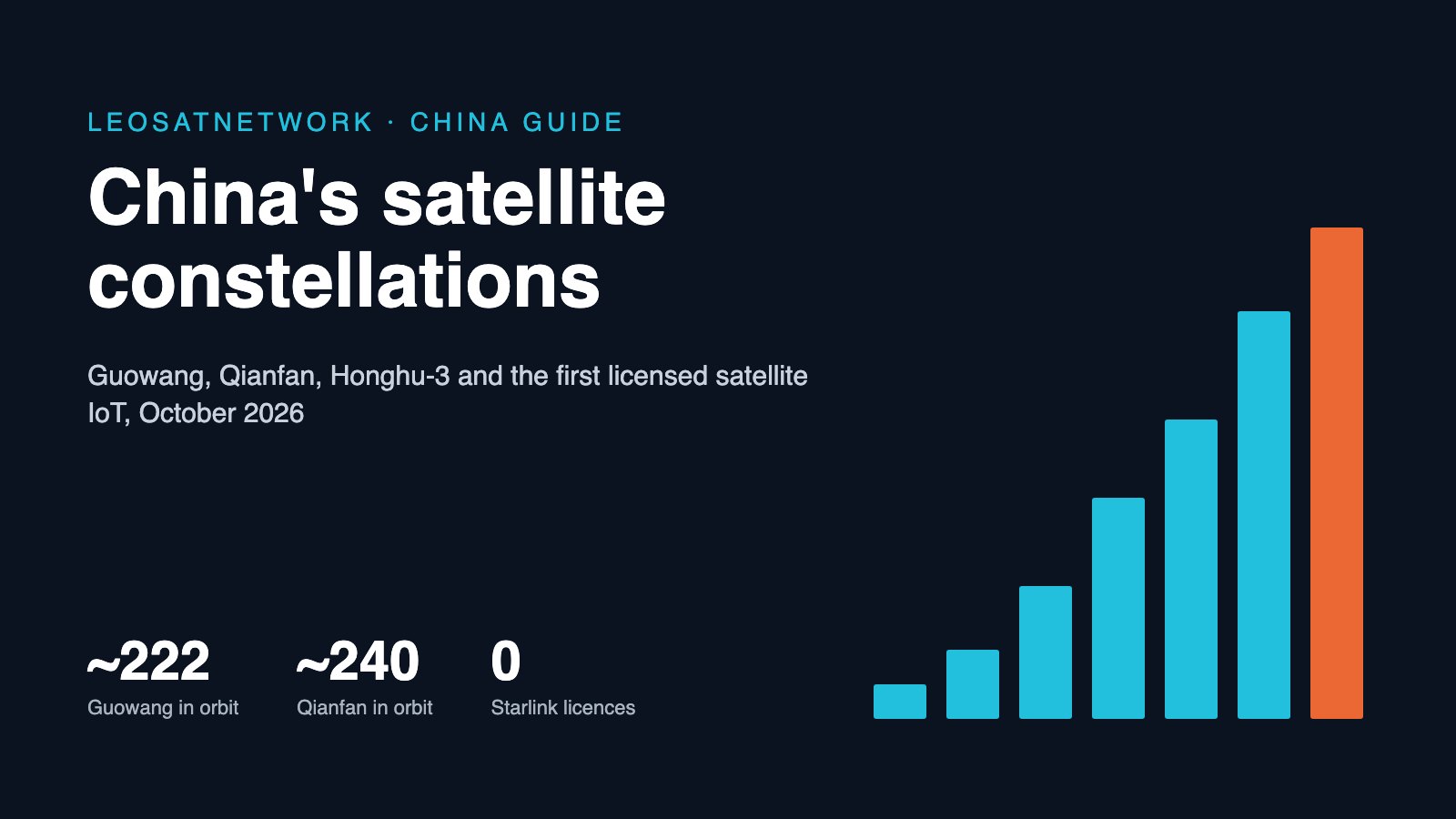
China's satellite constellations explained (2026): Guowang, Qianfan, Honghu-3 and who sells what
China is building two national LEO broadband constellations, Guowang (about 222 satellites in orbit in October 2026) and Qianfan (about 240), plus…
Related resources

An FCC commissioner on spectrum allocation and broadband (TeleGeography podcast)
Episode 614 of TeleGeography's podcast (68 minutes, June 2025): host Greg Bryan interviews FCC Commissioner Nathan Simington on spectrum allocation and broadband expansion, recorded the week he left the Commission. The clearest hour on how US spectrum decisions get made, which is where every satellite operator's capacity starts.

The FCC Spectrum Dashboard: who holds which frequencies (FCC video)
The FCC's own 2-minute introduction (2010, public domain) to its Spectrum Dashboard, the public tool that shows how bands between 225 MHz and 3.7 GHz are allocated, what they are used for and who holds licences where. Old, but the tool and the questions it answers are still current for anyone tracking direct-to-cell and mid-band spectrum.

FCC Space Bureau briefing: how satellite spectrum coordination works
A 50-minute recording of the FCC Space Bureau's 18 April 2024 transparency session on satellite spectrum coordination and Commission procedures, held one year after the Bureau's creation. The authoritative walkthrough of how operators coordinate frequencies and what the FCC expects in a filing.