Starlink vs Amazon Kuiper vs OneWeb: the 2020 comparison (Found And Explained)
An 8-minute 2020 explainer comparing the three LEO broadband projects as they were planned: Starlink, Amazon's Kuiper and OneWeb, then in bankruptcy. Useful as a time capsule; we score the predictions against the 2026 reality: 11,000+ Starlink satellites working, 398 Amazon Leo launched, OneWeb at 600+ under Eutelsat.
In this video
Found And Explained is a YouTube channel about aviation and space concepts. This 8 minute 2 second video from 13 September 2020 (about 35,000 views) sets up the "space internet race" between SpaceX's Starlink and Amazon's Kuiper, with OneWeb as the third contender, and asks which will win. Per its description, it frames the goal as "free internet, anywhere in the world", which none of the three ever promised; treat the narration as enthusiast commentary from the year Starlink opened its first beta and OneWeb was in Chapter 11.
Why it matters for a business buyer
It is worth watching as a record of what was expected, because the comparison it draws is the one buyers still make, and the answers have changed. On 21 September 2026:
- Starlink: 12,962 satellites launched and 11,139 working according to Jonathan McDowell's ledger; more than 6 million customers by mid-2025; business plans on sale in most countries; third-generation satellites tested on Starship in July 2026.
- Amazon Kuiper, renamed Amazon Leo: 398 satellites launched by July 2026 out of 3,236 licensed, enterprise beta since April 2026, sold through AT&T since September 2026, no consumer service and no price. Our analysis compares it with Starlink Business in detail.
- OneWeb: rescued in 2020 by the UK government and Bharti, merged into Eutelsat in 2023, more than 600 satellites in service, 229 more ordered in September 2026, sold to enterprises and governments through distributors; the sovereign alternative Europe is building IRIS² around.
The lesson for procurement: constellation size, launch cadence and go-to-market decided the outcome, not the 2020 technical comparisons. Starlink's vertical integration (its own rockets) is the reason it leads by an order of magnitude; Amazon's dependence on Vulcan, New Glenn and Ariane 6 is why it lags.
Watch this if
You want a light introduction to the three names before reading anything current, or an illustration for a presentation on how fast the market moved. For today's engineering picture, use the constellation views on satellitemap.space.
Go further
Definitions: Starlink, Amazon Kuiper / Leo, OneWeb, launch cadence, rocket reusability. Directories: LEO providers, Starlink providers, OneWeb providers.
Find a provider
The listings this resource is relevant to — every company is profiled with services, coverage and contact details.
Keep reading
Amazon Leo for business (2026): network status, antennas, partners and how to buy it
Amazon Leo, formerly Project Kuiper, had 396 satellites in orbit on 28 October 2026 and plans initial service in certain latitudes before the end of…
How to become a Starlink authorized reseller in 2026 (and the routes that remain open)
Starlink no longer accepts reseller applications: the programme is invite-only and indirect reselling on Local Priority plans was paused in April…
How to choose a Starlink installer for your business (2026): reseller, installer or managed provider
Starlink's own installers cover residential plans only, so a business site goes through an independent installer or an authorized reseller. This…
Related resources
Mega-constellations in three minutes: O3b mPOWER, OneWeb and Starlink
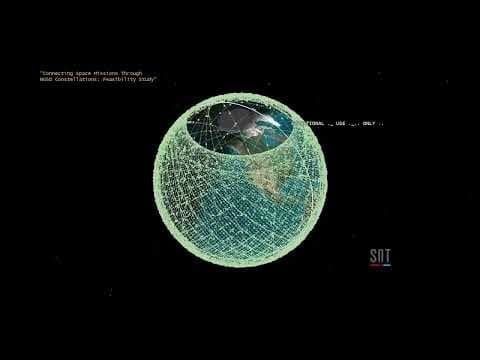
A concise academic explainer (November 2023) of non-geostationary constellations, comparing SES's O3b mPOWER in medium Earth orbit with OneWeb and Starlink in low Earth orbit, made alongside a Frontiers paper on connecting space missions through NGSO constellations. Good for the orbit and orbital-plane basics.
LeoLabs Space Platform: live LEO visualization and conjunction search
LeoLabs' browser visualization of low Earth orbit, built on its own radar network: search the catalogue by satellite or constellation, watch today's conjunctions and follow launches. Free to open, commercial data behind it.
CelesTrak: orbital element sets for Starlink, OneWeb, Kuiper and every constellation
CelesTrak, run by Dr. T.S. Kelso, publishes the general perturbation element sets (TLE, OMM, JSON, CSV) for every tracked satellite, grouped by constellation: Starlink, OneWeb, Kuiper, Iridium NEXT, Globalstar and more, plus operator-supplied supplemental data. Free, updated continuously.