Jonathan McDowell's Starlink statistics: launched, in orbit, working, reentered
The independent ledger of the Starlink constellation, updated several times a day by astronomer Jonathan McDowell: 12,962 satellites launched, 11,154 in orbit, 11,139 working and 1,808 reentered or failed as of 21 September 2026, broken down by generation and by launch. The citation-grade source for constellation size.
What it is
Jonathan McDowell is an astronomer at the Harvard-Smithsonian Center for Astrophysics and the author of Jonathan's Space Report, a newsletter that has documented every launch since 1989. His Starlink statistics page, part of planet4589.org, is a machine-generated ledger of every Starlink satellite: launched, in orbit, working (in an operational orbit), screened, being disposed of, reentered. It is updated whenever the public catalogue changes, several times a day; the page states its own timestamp ("2026 Sep 21 12:54" when we read it).
The figures on 21 September 2026
- All generations: 12,962 launched, 11,154 in orbit, 11,139 working, 1,808 down (reentered or failed).
- Generation 1 (v1.0 and v1.5): 4,714 launched, 3,185 in orbit, 3,173 working; the early satellites are being deorbited as they age.
- Generation 2 (V2 Mini): 8,228 launched, 7,969 in orbit, 7,966 working.
- Generation 3: 20 launched on Starship Flight 13 on 24 July 2026, none in orbit (a deliberate short-lived test batch), plus 2 earlier Gen3 demonstration units.
- Launches: every mission has its own table (the latest was numbered 375 when we read the page); 171 satellites are marked "screened" and 221 are in "disposal".
The page is careful about definitions: "working" means the satellite is in its operational orbit, and it notes that satellites still raising or lowering their orbit may nevertheless carry traffic. The gap between "in orbit" and "working" is therefore small; the gap between "launched" and "in orbit" (about 14 %) is the honest measure of attrition, planned deorbits included.
Who it is for
Anyone who has to write "Starlink has N satellites" and be right: journalists, analysts, consultants, and sales teams who prefer not to be corrected in a meeting. SpaceX's own Network Update said "more than 7,800 satellites in orbit" in mid-2025; this page tells you what the number is today and how it was built. It is also the reference for launch cadence, which matters for the capacity arguments in our Amazon Leo analysis: Amazon had 398 satellites launched by July 2026 against Starlink's 12,900.
How to use it
- Open the page and read the summary table; note the timestamp and cite it with your figure.
- Use the per-launch tables to trace a batch (how many of a given launch are still working), which is how failure rates by generation are computed.
- Combine with CelesTrak element sets if you need positions rather than counts.
Limits
It counts objects, not capacity or customers, and it relies on the public catalogue, so it says nothing about classified Starshield satellites. The page is plain HTML with no API; scrape it politely or transcribe the summary.
Related
Definitions: launch cadence, orbital debris, debris mitigation, Starlink. Directories: Starlink providers, LEO providers.
Find a provider
The listings this resource is relevant to — every company is profiled with services, coverage and contact details.
Keep reading
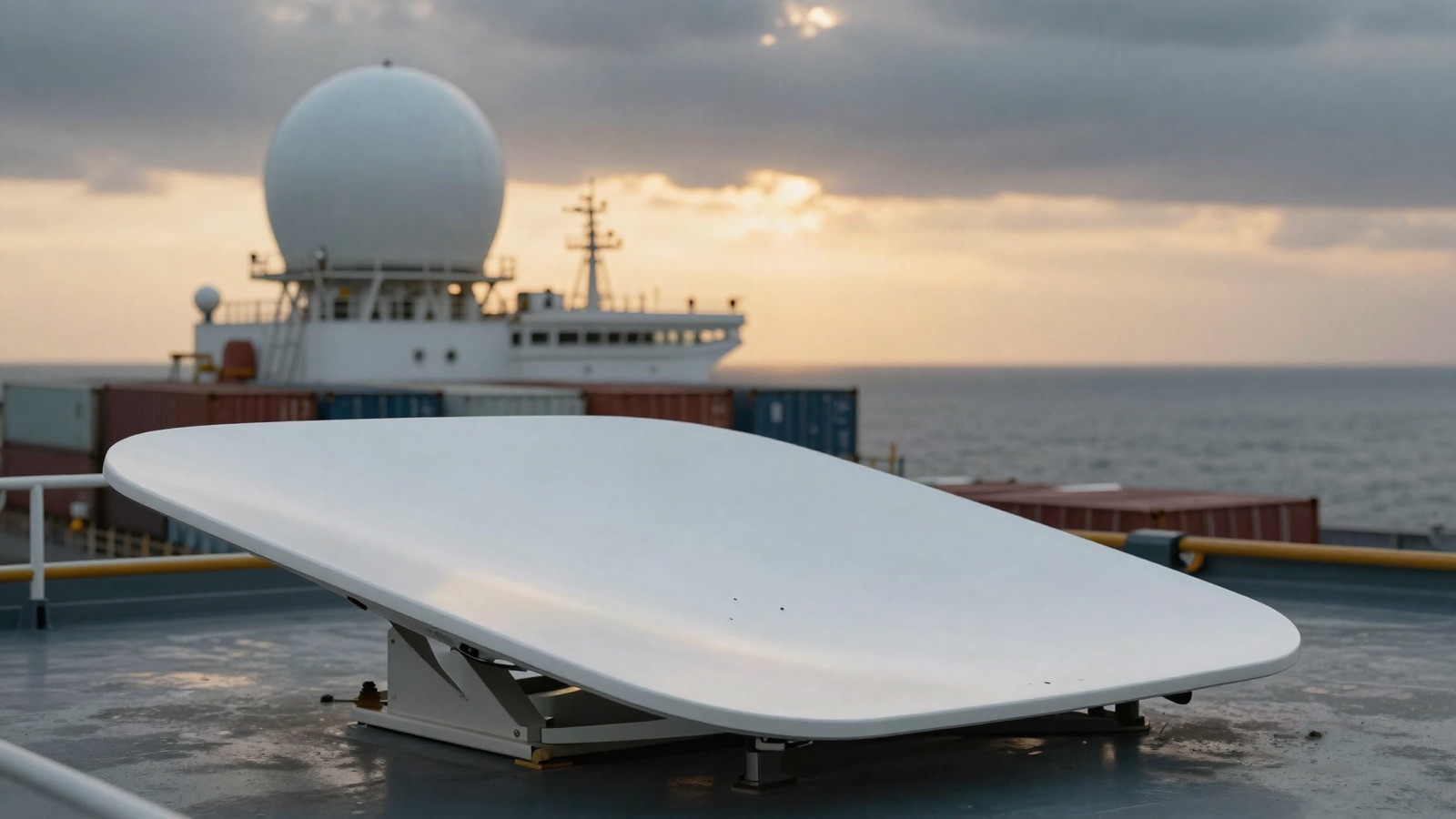
Starlink Maritime vs VSAT for commercial fleets: cost per vessel, plans and hybrid setups (2026)
Starlink Global Priority costs $250 (50 GB) to $2,150 (2 TB) a month per vessel when bought direct, and authorised distributors sell an unlimited…

Starlink in the United States: prices, installation cost and installers (2026)
Starlink covers every US state. Residential costs $55, $85 or $130 a month by speed tier, there is no upfront hardware cost in select areas ($349…

Starlink in the UK: availability, prices and installers (2026)
Starlink covers all of the UK. Residential costs £40, £60 or £80 a month depending on the speed tier your address is offered, there is no upfront…
Related resources
CelesTrak: orbital element sets for Starlink, OneWeb, Kuiper and every constellation
CelesTrak, run by Dr. T.S. Kelso, publishes the general perturbation element sets (TLE, OMM, JSON, CSV) for every tracked satellite, grouped by constellation: Starlink, OneWeb, Kuiper, Iridium NEXT, Globalstar and more, plus operator-supplied supplemental data. Free, updated continuously.
LeoLabs Space Platform: live LEO visualization and conjunction search
LeoLabs' browser visualization of low Earth orbit, built on its own radar network: search the catalogue by satellite or constellation, watch today's conjunctions and follow launches. Free to open, commercial data behind it.
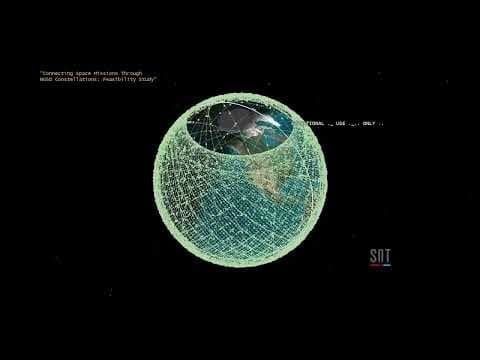
Mega-constellations in three minutes: O3b mPOWER, OneWeb and Starlink
A concise academic explainer (November 2023) of non-geostationary constellations, comparing SES's O3b mPOWER in medium Earth orbit with OneWeb and Starlink in low Earth orbit, made alongside a Frontiers paper on connecting space missions through NGSO constellations. Good for the orbit and orbital-plane basics.