An FCC commissioner on spectrum allocation and broadband (TeleGeography podcast)
Episode 614 of TeleGeography's podcast (68 minutes, June 2025): host Greg Bryan interviews FCC Commissioner Nathan Simington on spectrum allocation and broadband expansion, recorded the week he left the Commission. The clearest hour on how US spectrum decisions get made, which is where every satellite operator's capacity starts.
In this episode
TeleGeography, the telecom market research firm, published this audio-only episode on 5 June 2025 (1 hour 7 minutes). Host Greg Bryan interviews Nathan Simington, who served on the Federal Communications Commission from December 2020 and had, per the description, prior experience at the NTIA. The published outline lists the issues covered: spectrum allocation, broadband expansion and several other matters before the Commission. The timing is notable: Simington announced on 4 June 2025 that he would leave the FCC at the end of that week, which with Commissioner Starks' departure left the Commission without a quorum.
Why it matters for a business buyer
Spectrum is the raw material of satellite broadband, and in the United States the FCC decides who gets it and under what conditions. Three live examples in 2026:
- Starlink's V3 satellites and its "Starlink Mobile" plan depend on FCC approvals: the 65 MHz of low- and mid-band spectrum SpaceX is buying from EchoStar cannot be used before the transfer closes, expected late 2027.
- Amazon Leo's licence carries deployment milestones; the FCC waived the July 2026 half-constellation deadline in June 2026, without which the constellation would have been in breach.
- Direct-to-cell services from T-Mobile (with Starlink) and AT&T and Verizon (with AST SpaceMobile) rely on the FCC's supplemental coverage from space rules, adopted in 2024.
An hour with a commissioner explains the vocabulary (allocation, auction, sharing, interference protection) and the politics behind the rules that decide how much capacity a provider can sell you and where. For the satellite-specific mechanics, the FCC's own Space Bureau session on spectrum coordination and the CSIS piece on modernising LEO spectrum rules are the natural next listens.
Listen to this if
You sell or buy satellite capacity in the US market and want to follow FCC news without a law degree, or you are preparing a regulatory section for a business plan.
Go further
Definitions: spectrum coordination, frequency coordination, ITU filing, Ku-band, Ka-band. Directories: satellite providers in the United States, LEO providers.
Find a provider
The listings this resource is relevant to — every company is profiled with services, coverage and contact details.
Keep reading

Starlink in the United States: prices, installation cost and installers (2026)
Starlink covers every US state. Residential costs $55, $85 or $130 a month by speed tier, there is no upfront hardware cost in select areas ($349…
Managed Starlink providers in the US: enterprise resellers compared (2026)
Managed Starlink providers resell Starlink Business and run it for you: one bill, pooled data, failover with your network, installers and 24/7…
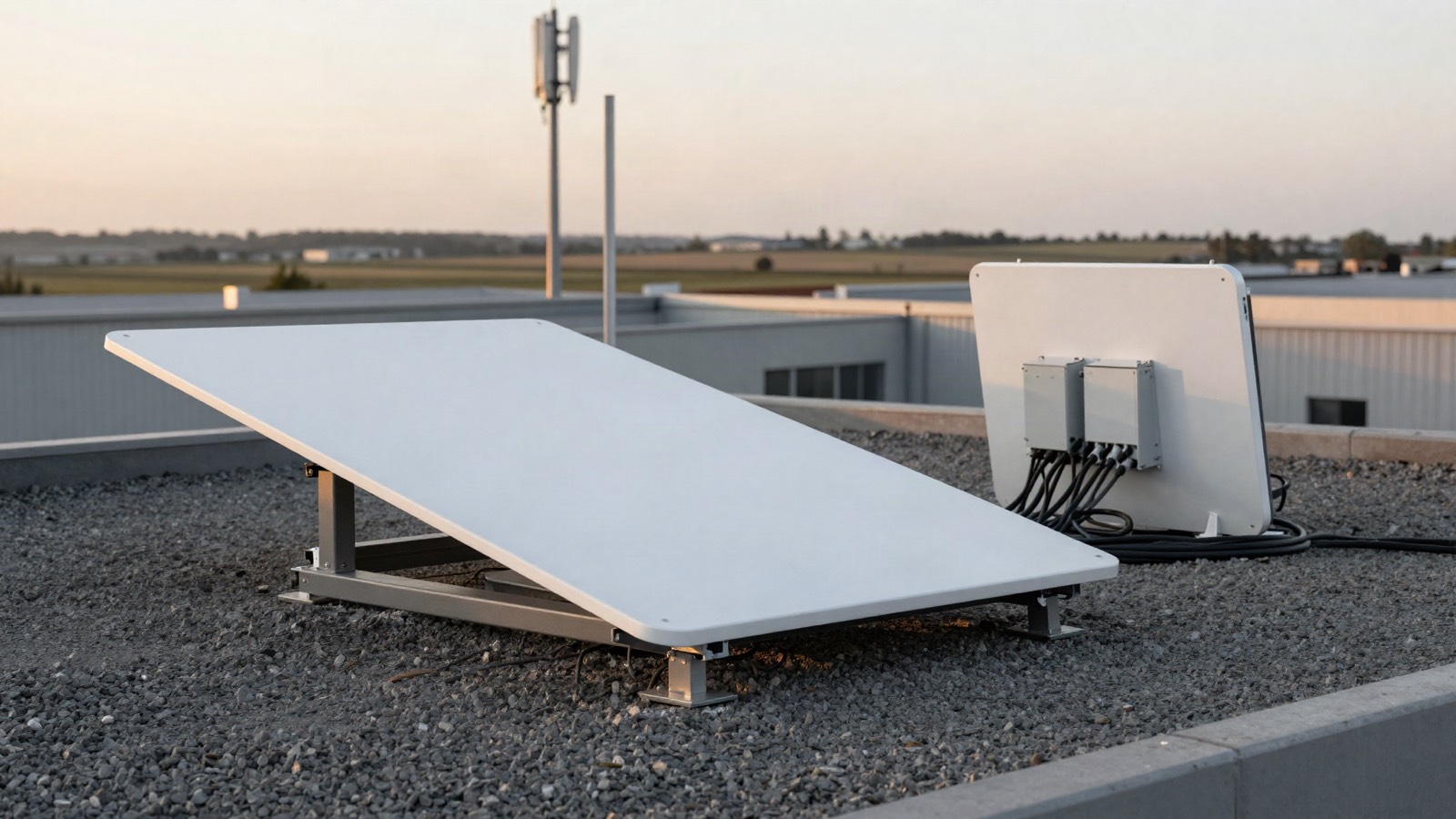
Amazon Leo goes B2B first: what AT&T's bundle means for enterprise buyers still choosing Starlink (September 2026)
AT&T Business started selling Amazon Leo on 8 September 2026 as a third network layer next to fibre and 5G, with the 1 Gbps Leo Ultra terminal and no…
Related resources
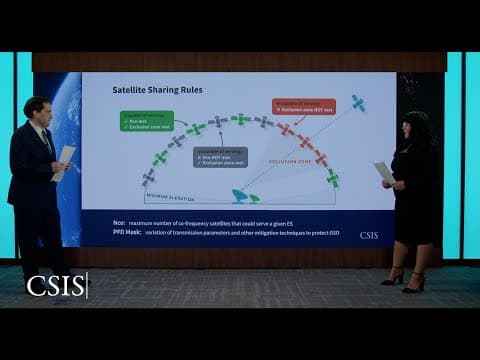
Outdated rules, new space race: modernising LEO spectrum policy (CSIS)
An 11-minute CSIS video (August 2025) in which Matt Pearl (CSIS) and Karina Perez (CCIA) argue that decades-old spectrum rules, notably the power limits shared between LEO and GEO systems, slow US LEO innovation, and explain what modernising them would mean for capacity and competition.

The FCC Spectrum Dashboard: who holds which frequencies (FCC video)
The FCC's own 2-minute introduction (2010, public domain) to its Spectrum Dashboard, the public tool that shows how bands between 225 MHz and 3.7 GHz are allocated, what they are used for and who holds licences where. Old, but the tool and the questions it answers are still current for anyone tracking direct-to-cell and mid-band spectrum.

FCC Space Bureau briefing: how satellite spectrum coordination works
A 50-minute recording of the FCC Space Bureau's 18 April 2024 transparency session on satellite spectrum coordination and Commission procedures, held one year after the Bureau's creation. The authoritative walkthrough of how operators coordinate frequencies and what the FCC expects in a filing.