OpenSN: open-source emulator for large LEO satellite networks
OpenSN, from Beihang University, emulates LEO satellite networks with one container per node so that real routing software runs on every satellite and gateway. It scales across machines and builds mega-constellations 5 to 10 times faster than StarryNet. Published in IEEE TPDS, August 2025.
What it is
OpenSN is an open-source library for emulating large satellite networks, developed at Beihang University in Beijing and described in "OpenSN: An Open Source Library for Emulating LEO Satellite Networks" (Wenhao Lu, Zhiyuan Wang, Hefan Zhang, Shan Zhang and Hongbin Luo), published in IEEE Transactions on Parallel and Distributed Systems, volume 36, issue 8, August 2025. The code is on GitHub under the OpenSN-Library organisation; the documentation site is licensed under Creative Commons BY-SA 4.0.
Unlike simulators that model a constellation mathematically, OpenSN is an emulator: every satellite and ground node is a container running real network software, and the links between containers are reconfigured as the orbits move. The authors' design choices are a container-based rather than Mininet-based architecture, a key-value database that separates user configuration from container management, and horizontal scaling across several machines. They report constructing mega-constellations five to ten times faster than StarryNet and updating link state two to four times faster than Mininet-based tools.
What you can do with it
- Run an actual routing daemon (OSPF, BGP or a custom protocol) on each emulated satellite and measure convergence when inter-satellite links come and go.
- Emulate a Starlink-like shell with thousands of nodes spread over a cluster, and inject traffic between gateways and user terminals.
- Compare topologies (+Grid, Walker Delta versus Walker Star, see Walker constellation) on the same routing code.
Who it is for
Network researchers and the engineering teams of operators or large integrators who design routing and traffic engineering for LEO systems. It is not a tool for buyers or installers. If you need to understand why a provider's latency varies with the number of satellite hops, or how a constellation routes around a failed gateway, OpenSN and its sibling Hypatia are the two open frameworks that let you test the answer instead of taking the marketing word for it. Hypatia pre-computes state and simulates packets in ns-3; OpenSN runs real software in containers. They are complementary.
How to use it
- Clone the OpenSN-Library repository and follow the documentation site's installation guide (Linux hosts with Docker; several hosts for large constellations).
- Describe the constellation (planes, satellites per plane, altitude, inclination) and the ground stations in the configuration files.
- Choose the routing software image for the nodes, start the emulation and drive it through the key-value store.
- Capture traffic with standard tools inside the containers; export link-state timelines for analysis.
Limits
OpenSN emulates the network layer, not the radio: no beam scheduling, no link budget, no rain fade. Resource needs grow with constellation size, and the project is young (2025), so documentation and community are thinner than for ns-3. Read the TPDS paper before relying on the performance figures for your own hardware.
Related
Definitions: satellite constellation, low Earth orbit, non-terrestrial network. Directory: LEO providers.
Find a provider
The listings this resource is relevant to — every company is profiled with services, coverage and contact details.
Keep reading
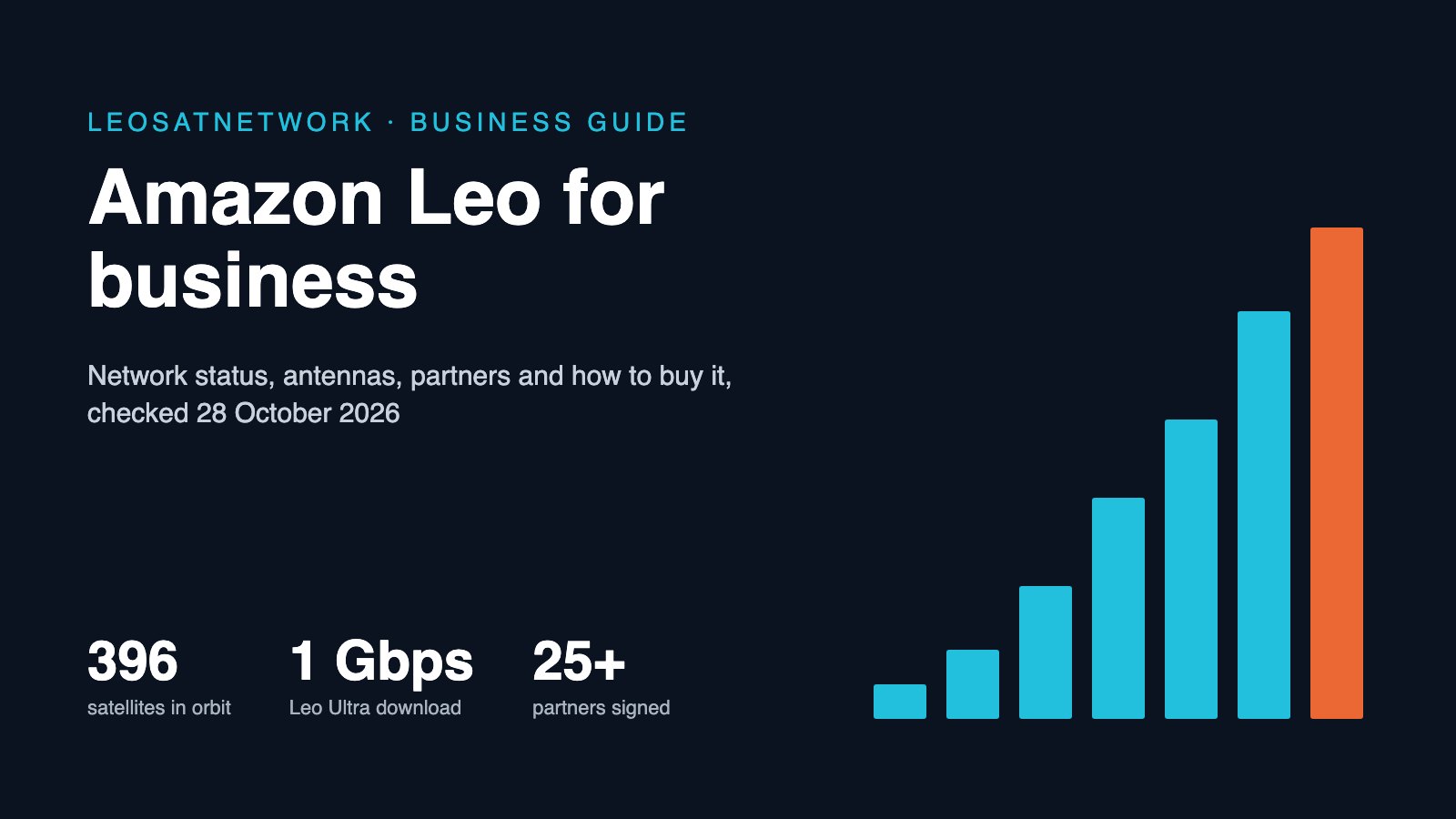
Amazon Leo for business (2026): network status, antennas, partners and how to buy it
Amazon Leo, formerly Project Kuiper, had 396 satellites in orbit on 28 October 2026 and plans initial service in certain latitudes before the end of…
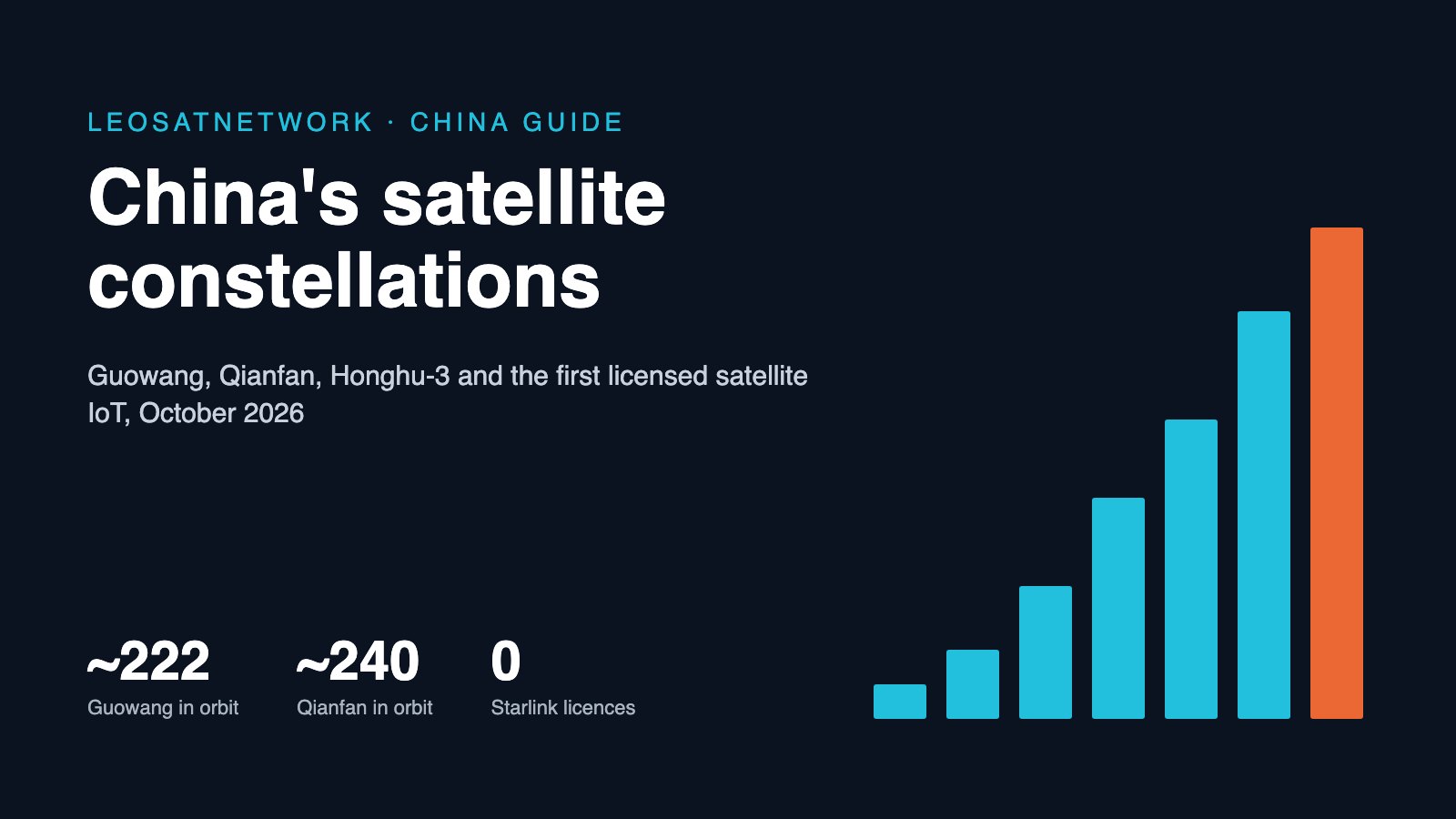
China's satellite constellations explained (2026): Guowang, Qianfan, Honghu-3 and who sells what
China is building two national LEO broadband constellations, Guowang (about 222 satellites in orbit in October 2026) and Qianfan (about 240), plus…
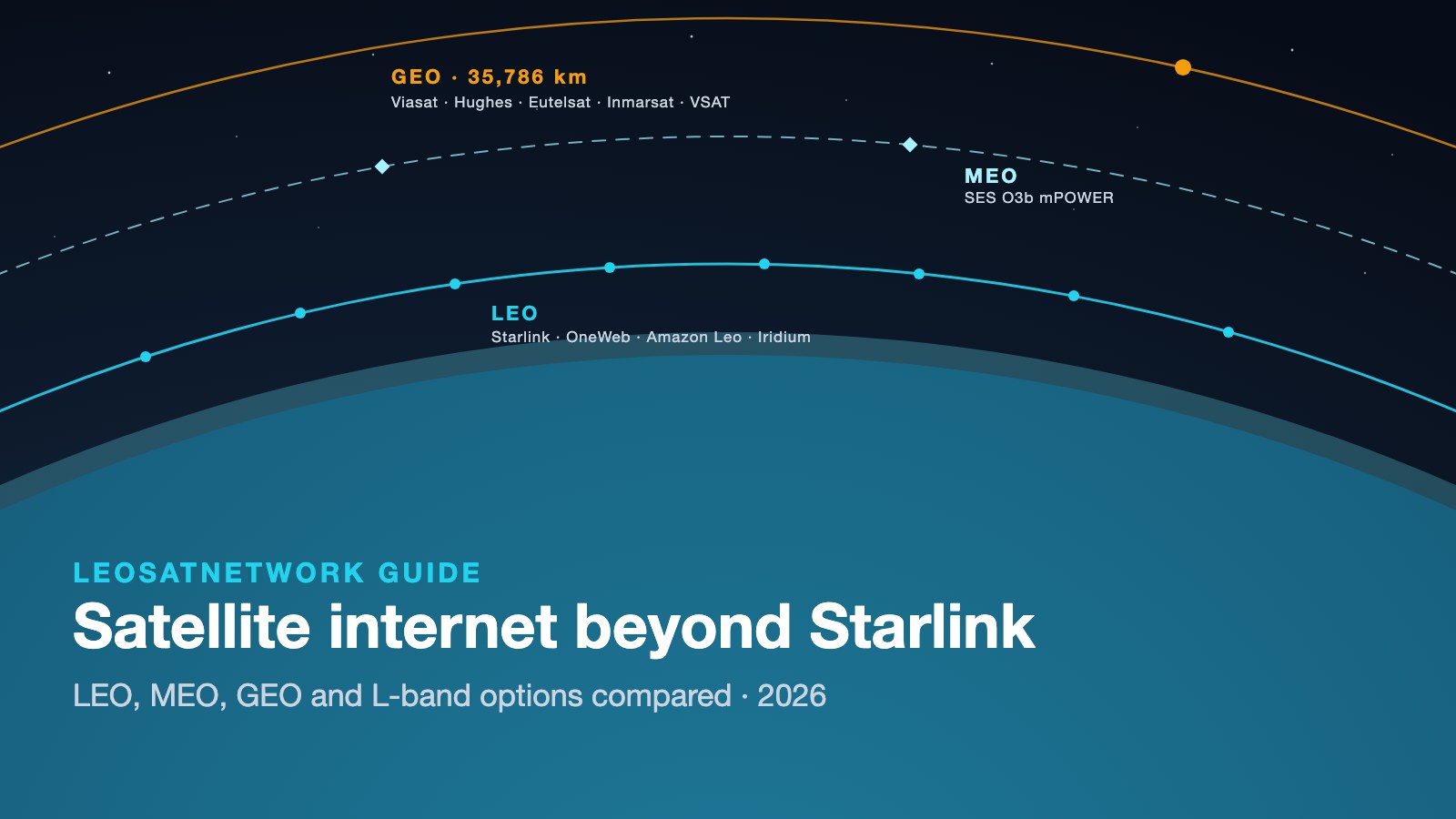
Satellite internet beyond Starlink: LEO, MEO, GEO and L-band options compared (2026)
Starlink sells residential service in 154 countries, but companies, fleets and governments also buy Eutelsat OneWeb (about 650 LEO satellites…
Related resources
Hypatia: LEO satellite network simulation framework (ETH Zurich)
Hypatia is the reference open-source framework for simulating LEO networks: it generates a constellation and its routing over time (satgenpy), runs packet-level ns-3 simulations (ns3-sat-sim) and renders Cesium visualisations. From the IMC 2020 paper; 518 GitHub stars, last update May 2024.

Mega-constellations in three minutes: O3b mPOWER, OneWeb and Starlink
A concise academic explainer (November 2023) of non-geostationary constellations, comparing SES's O3b mPOWER in medium Earth orbit with OneWeb and Starlink in low Earth orbit, made alongside a Frontiers paper on connecting space missions through NGSO constellations. Good for the orbit and orbital-plane basics.
Star Debug: open-source Starlink terminal manager for Android and iOS
Star Debug is a free, open-source Flutter app (Android and iOS) that reads the Starlink app's DebugData, shows terminal telemetry and alerts, and sends reboot, stow and GPS commands to the dish. 80 stars, last pushed August 2026, born from the Ukrainian volunteer initiative Narodnyi Starlink.