Are Low Earth Orbit satellites worse than Geostationary?
YouTube is a globally recognized digital platform serving as a comprehensive repository and distribution channel for video content. It enables users worldwide to upload, share, view, and comment on videos, encompassing a vast array of topics from educational lectures and technical demonstrations to news, entertainment, and personal vlogs. Functioning primarily as a user-generated content (UGC) platform, it also hosts significant volumes of professionally produced media, acting as a crucial hub for digital media consumption and dissemination on a global scale.
The platform's infrastructure is designed to support high-volume video streaming, utilizing sophisticated content delivery networks (CDNs) to ensure efficient distribution of media to users across diverse geographical locations and network conditions. This global reach and robust delivery mechanism make it a relevant tool for industries requiring widespread content distribution, including the satellite and connectivity sectors.
Key Features and Capabilities
- Content Hosting and Distribution: YouTube provides free hosting for video files, allowing individuals and organizations to upload content in various formats and resolutions, ranging from standard definition to 4K and 8K. Content is then made accessible globally, subject to privacy settings and regional restrictions.
- Creator Tools and Monetization: The platform offers a suite of tools for content creators, including analytics dashboards to track viewer engagement, audience demographics, and traffic sources. It supports various monetization options, such as advertising revenue sharing, channel memberships, and Super Chat, enabling creators to generate income from their content.
- Developer API: For developers, YouTube offers an extensive Application Programming Interface (API) that allows for programmatic interaction with the platform. This API enables third-party applications to integrate YouTube functionalities, such as searching for videos, playing content, managing playlists, and accessing channel data. This capability facilitates custom integrations for content management systems, educational platforms, or specialized industry applications.
- User Engagement and Community Features: Viewers can subscribe to channels, create playlists, comment on videos, and share content across other social media platforms. These features foster community building and direct interaction between content creators and their audience.
- Accessibility and Discoverability: Advanced search algorithms, recommendation engines, and categorization tools help users discover relevant content. Features like subtitles, captions, and playback speed controls enhance accessibility for a diverse user base.
- Platform Governance and Safety: YouTube implements policies and tools to manage content, including copyright protection mechanisms (e.g., Content ID), user guidelines for appropriate behavior, and safety features aimed at protecting viewers and creators from harmful content.
Target Audience and Utility in Satellite and Connectivity
YouTube's broad functionality makes it valuable for various stakeholders within the satellite and connectivity industry:
- Satellite Operators and Service Providers: Can leverage the platform for public relations, educational outreach, and marketing. This includes sharing videos explaining satellite technology, demonstrating new services (e.g., broadband internet via satellite), providing customer support tutorials, and showcasing corporate social responsibility initiatives.
- Equipment Manufacturers: Can utilize YouTube for product demonstrations, technical specifications, installation guides, troubleshooting videos, and comparisons of their satellite communication hardware, ground segment equipment, or network components.
- Developers and Engineers: Can benefit from accessing educational content, conference presentations, and technical deep-dives shared by industry experts. The YouTube Data API can also be used to integrate video content into internal training portals, documentation platforms, or monitoring dashboards that require video playback capabilities.
- Educational Institutions and Researchers: Can publish lectures, research findings, virtual tours of facilities, and documentaries related to space technology, telecommunications, and connectivity advancements, reaching a global audience of students and fellow researchers.
- Industry Associations and Media Outlets: Can host interviews with industry leaders, panel discussions, event highlights, and news segments, providing a centralized platform for industry-specific information and discourse.
- End-Users and Consumers: Can find unbiased reviews, setup guides, and comparisons of connectivity services (e.g., satellite internet, mobile broadband), helping them make informed decisions and troubleshoot issues.
Technical Details and Integrations
From a technical standpoint, YouTube relies on a global infrastructure to handle petabytes of video data and billions of hours of viewing time monthly. Its adaptive bitrate streaming technology dynamically adjusts video quality based on a viewer's internet connection speed and device capabilities, optimizing the viewing experience even over challenging network conditions, which can be particularly relevant for users in remote areas accessing content via satellite internet connections. The platform supports a wide range of video codecs and containers, ensuring compatibility across diverse devices and operating systems.
The YouTube Data API allows for a rich set of integrations, enabling developers to build applications that:
- Search for public videos, channels, and playlists related to satellite and connectivity.
- Embed YouTube players into custom applications or websites, controlling playback and player behavior.
- Retrieve metadata for videos, such as titles, descriptions, categories, and tags, which can be useful for content curation.
- Manage user-generated content, though this is typically for specific applications with authenticated users.
While YouTube itself is not open-source, its open API fosters a vast ecosystem of third-party tools and applications, extending its functionality and allowing for specialized use cases. The platform benefits from a massive global community of creators who contribute diverse content and viewers who engage with it, making it a dynamic and ever-evolving resource for information and entertainment.
Related resources
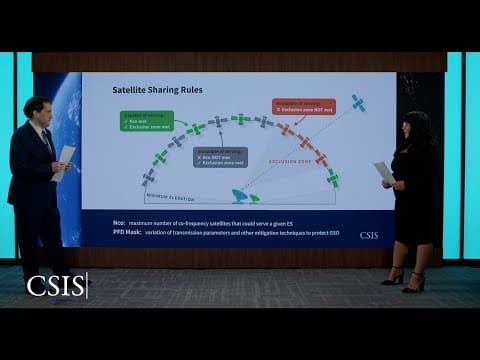
Outdated Rules, New Space Race - Modernizing LEO Spectrum
Policy discussion on need to modernize FCC spectrum allocation rules for LEO satellite constellations, examining how decades-old regulations designed for GEO satellites hamper innovation and U.S. leadership in new space race.

FCC Announces Spectrum Dashboard
FCC introduction of public Spectrum Dashboard tool allowing review of how radio frequency bands are allocated, utilized, and licensed across different services including satellite, broadcast, cellular, and government use.

T-Mobile Starlink Direct to Cell Review - Rocky Mountains Test
In-depth review of T-Mobile Starlink Direct to Cell technology tested in remote Colorado mountains, examining automatic satellite handoff, message delivery performance, and current limitations including lack of voice and image support.